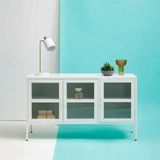
Free Delivery All Over UK*
close
Top products
SHOW ALL PRODUCTS

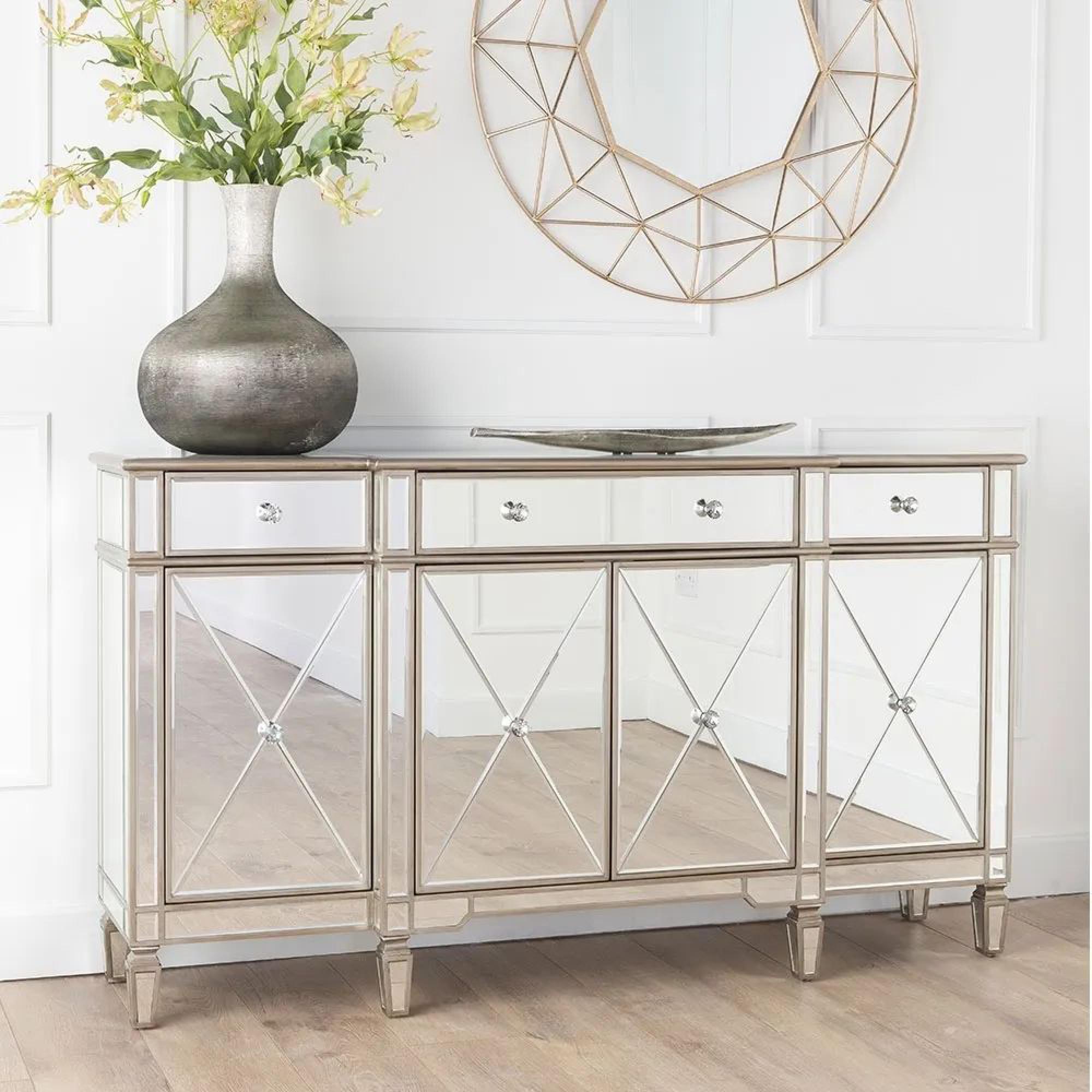
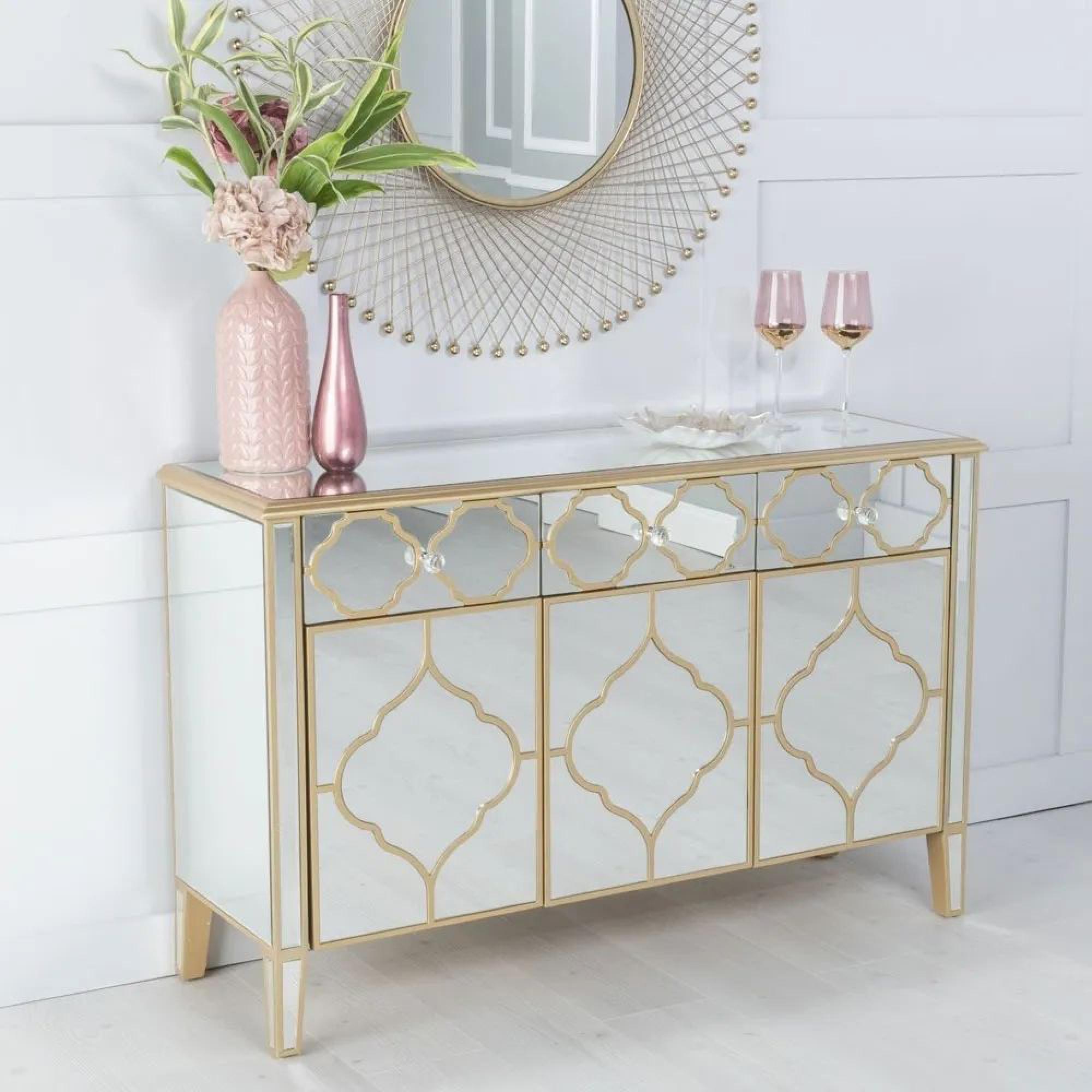
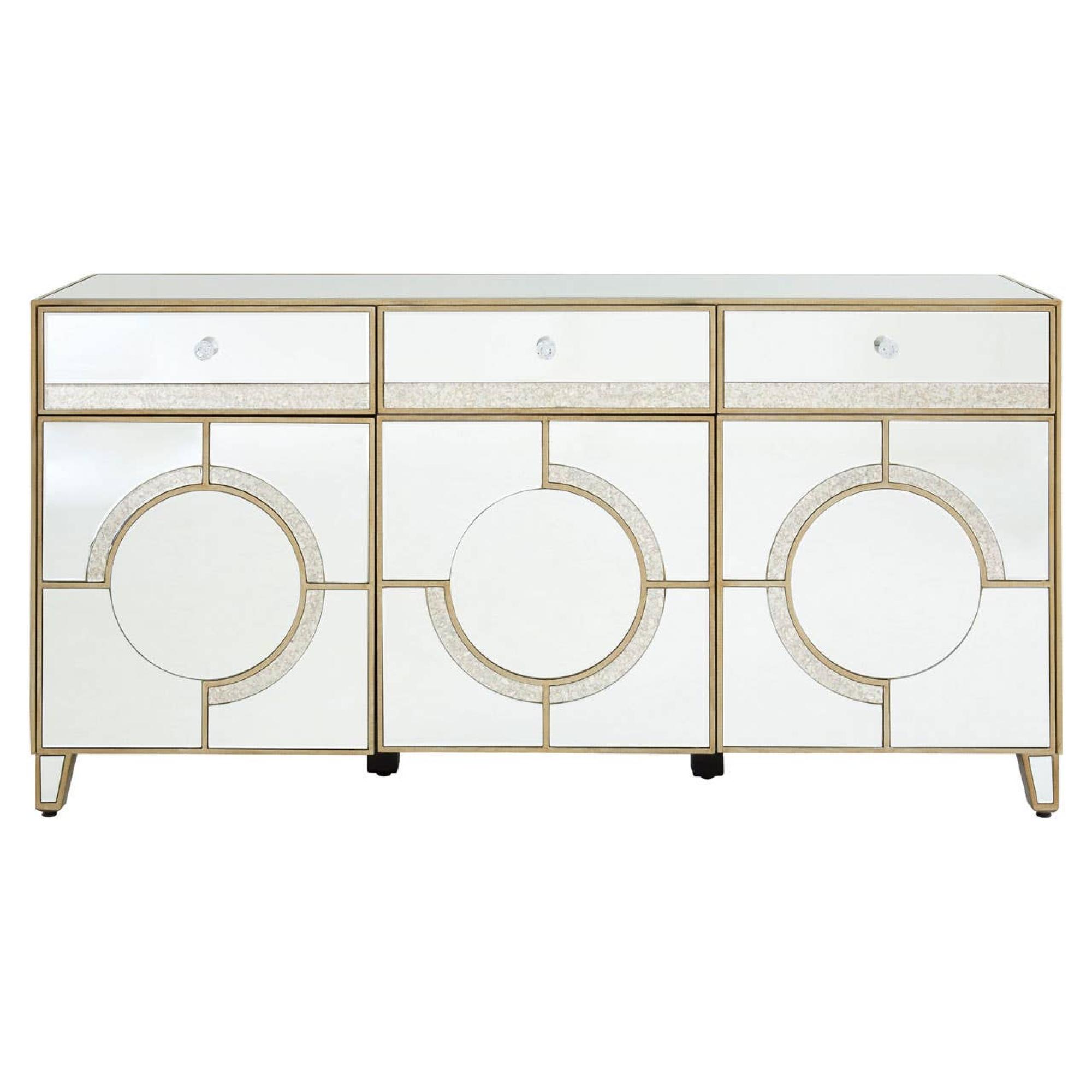
Mirrored Sideboards

Found 8 Items

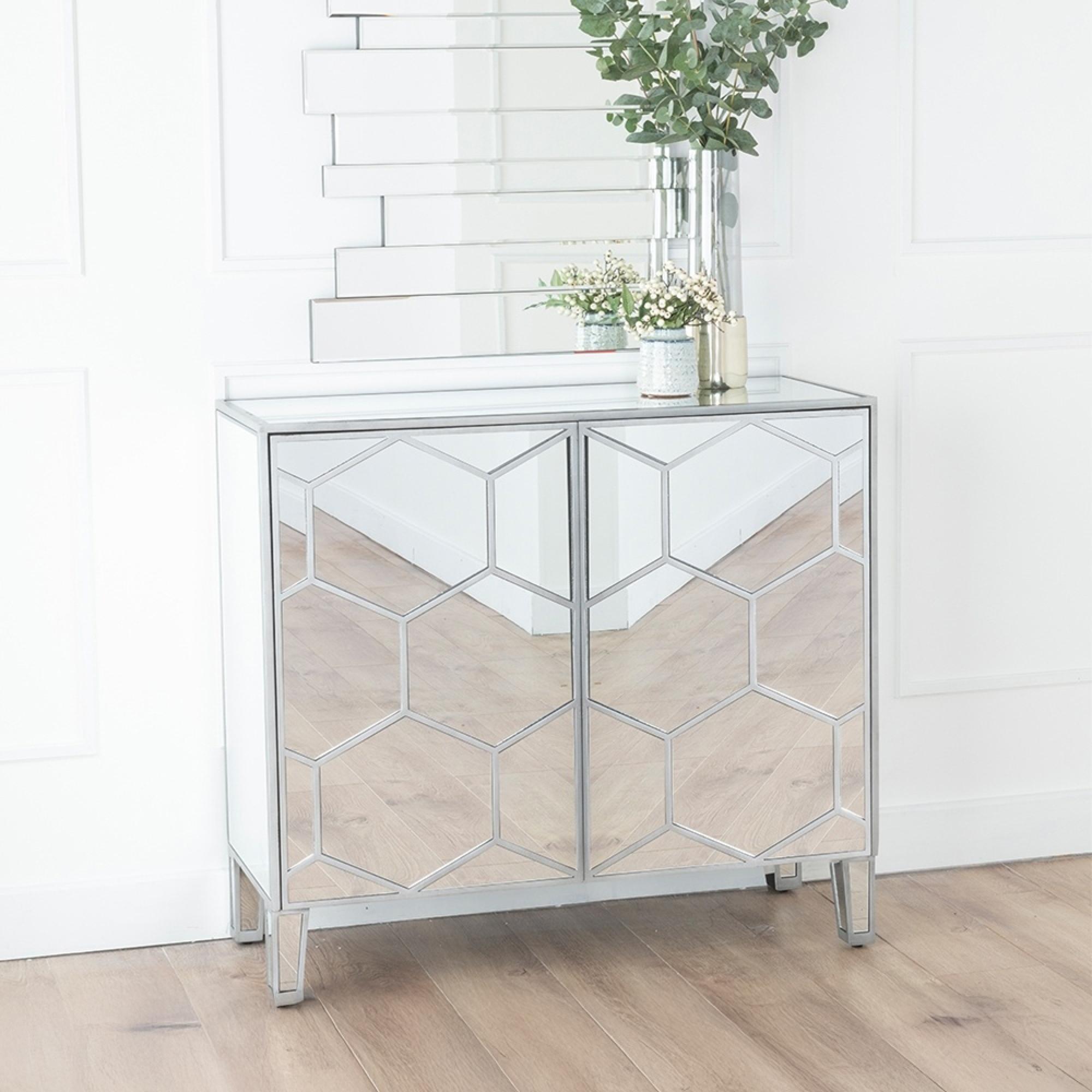
The Mirrored Sideboards category brings together choices intended to combine useful enclosed storage with a surface for serving or display. Compare door and drawer layout, internal shelving, width, depth, handles and finish to identify the right balance of appearance and function. The mirrored focus makes material, finish and care especially important when comparing products. Plan enough clearance for doors and drawers to open without obstructing walkways.
Read more X Close

Price

Type

No. of Doors

No. of Drawers

Material

Choosing Mirrored Sideboards

This category focuses on Mirrored Sideboards that can combine useful enclosed storage with a surface for serving or display. Start with the room layout and daily use, then compare door and drawer layout, internal shelving, width, depth, handles and finish. The mirrored focus makes material, finish and care especially important when comparing products. This keeps the decision focused on practical suitability as well as style.

Plan the space before choosing

Plan enough clearance for doors and drawers to open without obstructing walkways. Record the available width, depth and height, including clearance for doors, drawers, reclining parts or extensions where relevant. Account for skirting boards, radiators, sockets and walking routes, then check the access route through doors, halls and stairs.

For adjacent choices, explore Sideboards, Indian Sideboards and Italian Sideboards. Use these comparisons alongside the specifications on each product page.

Mirrored Sideboards for considered interiors

The Mirrored Sideboards category focuses on choices intended to combine useful enclosed storage with a surface for serving or display. A suitable option should respond to the room's proportions, surrounding furniture and practical demands of everyday use. The mirrored focus makes material, finish and care especially important when comparing products.

Material, finish and construction

When comparing sideboards, look closely at door and drawer layout, internal shelving, width, depth, handles and finish. Materials influence appearance, weight and maintenance, while finish affects colour coordination and day-to-day care. Use the written specification to confirm construction and care requirements.

Function and room planning

Plan enough clearance for doors and drawers to open without obstructing walkways. Mark out the footprint and consider how people move around it. Where a product opens, extends, swivels or reclines, include that working clearance. For storage, seating or sleeping products, match the layout, support and capacity to the needs of regular users.

Creating a coordinated result

Build the room around a clear relationship between scale, colour and material. Matching every finish is not essential, but repeating one or two elements can connect separate pieces. You can also compare Sideboards, Indian Sideboards and Italian Sideboards for closely related room and product choices. Use the individual listing to confirm dimensions, included components, assembly and suitability.
Read more X Close

FAQs on Mirrored Sideboards

How do I choose the right mirrored sideboard for my room?

Measure your space first, noting wall length and height. Consider storage needs—drawers suit small items, larger cupboards work for tableware. Check door swing clearance and ensure the style complements your existing décor. Darker frames suit modern spaces; lighter finishes work with traditional interiors.

Sideboards are typically wider, lower pieces designed for dining rooms with display and storage. Cabinets are often narrower, taller units for hallways or living rooms. Sideboards usually feature more horizontal lines; cabinets emphasise vertical space. Both use mirrored panels but serve different functional purposes.

Yes, mirrored surfaces reflect light and create visual depth, making compact rooms feel larger and brighter. A 2-door unit works well in tight spaces without overwhelming the area. Position against the longest wall and keep styling minimal to maximise the spacious effect.

Keep the top balanced with 3–5 accessories: pair matching table lamps at each end, add a central mirror or artwork, then include one decorative object like a vase or bowl. Leave negative space to avoid clutter and let the mirrored base remain the focal point of the display.

Use a dry microfibre cloth daily for dust removal. For streaks, spray glass cleaner onto the cloth—not the mirror—then wipe in one direction. For stubborn marks, use a damp cloth with distilled water and white vinegar, then buff dry immediately with a lint-free cloth.

Both rooms suit mirrored sideboards, though dining rooms are traditional. In kitchens, ensure units are away from splash zones near sinks. Dining sideboards display tableware and serve food; they work best in formal or open-plan settings where they become a statement piece.

Yes, they offer dual function: practical storage plus visual impact that lifts room proportions. Quality units last 10+ years with basic care. Prices start around £250 for smaller pieces, making them accessible. The light-reflecting benefit justifies the cost for most living spaces.

Standard dining rooms suit 120–160cm wide sideboards, positioned against the wall opposite or beside the table. Height should be 75–85cm to clear dining chairs when doors open. Depth of 35–40cm keeps the piece functional without protruding into walkways.

Stainless steel handles suit contemporary spaces and hide fingerprints better than chrome. Crystal or brass knobs complement glamorous, traditional interiors. Cup handles work well on larger door frames. Choose recessed handles if space is tight, or statement pulls if the sideboard is a focal point.

Most arrive partially or fully assembled. Basic assembly typically involves attaching legs or handles using provided tools—no specialist skills needed. Heavy units benefit from two people during placement. Check the assembly guide and allow 30–60 minutes for final setup and positioning.

Lighter units under 50kg can be moved solo with care, though two people are safer for stability. Heavier pieces (70kg+) need two people and a dolly. Always empty shelves first and protect the mirrored surface during transport with blankets or packaging materials.
Top