


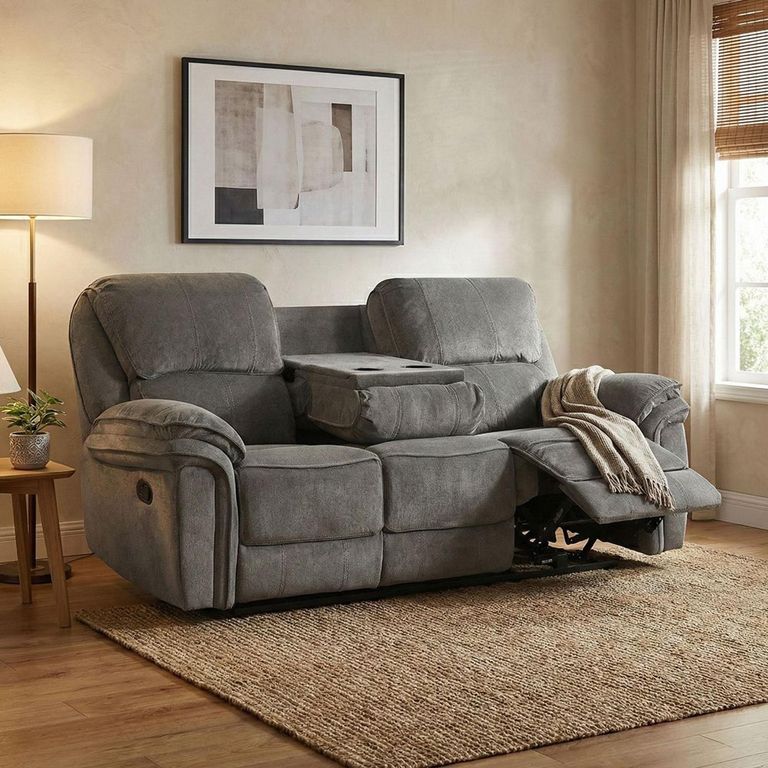
A fabric sofa rarely becomes dirty all at once. It happens gradually: crumbs settle between the cushions, dust gathers along the back, one seat receives more use than the others and a small drink spill leaves a faint edge that becomes noticeable later.
Regular, gentle care is usually more effective than an occasional aggressive clean. It is also safer. Upholstery fabrics vary considerably, and a method that works on one sofa can mark, shrink or discolour another.
If you are choosing a new sofa, compare the materials and care information supplied with individual fabric sofas. Keep those instructions after delivery; they should take priority over general advice.
Begin with the manufacturer’s instructions
Before applying water or cleaning product, find the sofa’s care label or manufacturer’s guidance. Removable covers are not automatically machine washable, and a zip does not necessarily mean the cover is designed to be taken off.
If the label is missing, contact the retailer or manufacturer with the product details. Guessing is risky, especially with velvet, linen blends, viscose and fabrics with stain-resistant finishes.
Where a specialist cleaning method is required, use a professional upholstery cleaner. Replacing a damaged cushion cover is generally more difficult than arranging the correct treatment in the first place.
A realistic weekly routine
You do not need to deep-clean a sofa every weekend. A short routine is enough to stop everyday debris becoming embedded.
Remove loose throws and cushions, then check between the seats for objects before vacuuming. Coins and small toys are not especially kind to vacuum cleaners.
Use low suction and an upholstery attachment if the sofa’s instructions permit it. Work gently across:
- Seat and back cushions
- The gaps between cushions
- Armrests and head-resting areas
- The front edge beneath the seats
- The exposed frame under removable cushions
Avoid dragging a hard vacuum nozzle directly across the fabric. It can disturb the surface or leave lines on more delicate upholstery.
Brushing can help with pet hair, but use a tool recommended for upholstery. Test it somewhere inconspicuous first; stiff brushes and sticky rollers may pull fibres from loosely woven material.
Deal with spills while they are still spills
The first few minutes make a difference. Remove any solid material carefully with a spoon or blunt edge, working inwards so the affected area does not spread.
For liquid, use a clean, colourfast white cloth to blot. Press and lift rather than rubbing backwards and forwards. Rubbing drives moisture further into the upholstery and can alter the texture of the fabric.
Do not pour water over the mark. Too much moisture can spread the stain, leave a ring or soak into the filling below.
Once the excess has been lifted, follow the sofa’s approved cleaning method. If a suitable upholstery product is allowed, test it on a hidden section and wait for the area to dry fully before treating the visible mark. Colour change is not always apparent while fabric is damp.
Unknown stains, large spills and marks on delicate fabrics are good reasons to call a professional.
Avoid homemade mixtures unless they are approved
Washing-up liquid, bicarbonate of soda, vinegar and other household products are often suggested as universal upholstery cleaners. They are not universal.
A mixture may leave residue, lighten the colour, affect a protective treatment or react unpredictably with the fibre. Even plain water can create a visible tide mark on certain materials.
Use only the method recommended for that particular sofa. “Fabric” describes a broad group of materials, not one surface with a single cleaning rule.
Look after the cushions as well as the cover
On many sofas, the seats used most often soften faster than the others. Where the construction allows it, swap cushions between positions and turn reversible cushions periodically.
Plump fibre-filled back cushions by pushing the filling back towards the centre and corners. This helps restore their shape before the filling settles permanently to one side.
Foam cushions normally need less plumping, but rotating them can still promote more even wear. Never bend or beat the filling unless the manufacturer recommends it.
If your sofa is a fixed-cushion model, vary where people sit when practical. The favourite corner will always age faster if it carries most of the household’s use.
Protect the fabric from sunlight and heat
Strong sunlight can fade upholstery, and the change may be uneven if only one part of the sofa receives direct light. Curtains or blinds can reduce exposure during the brightest part of the day.
Leave some distance between the sofa and radiators, fires or other heat sources. Continuous heat can dry materials and may affect the frame or fillings as well as the visible fabric.
Moving the sofa a few centimetres may also improve air circulation and make it easier to clean behind it.
Fabric sofas in busy family homes
A pale sofa is not forbidden in a home with children or pets, but it calls for realistic habits.
Keep an approved cleaning kit where it can be reached quickly. Washable throws can protect favourite seats, provided they are colourfast and do not transfer dye. Pet blankets are easier to clean than an entire sofa, and regular grooming reduces the amount of loose hair reaching the upholstery.
For rooms that need additional sleeping space, fabric sofa beds require attention around the mechanism too. Remove crumbs before opening the bed and follow the separate care instructions for the mattress and moving parts.
When is professional cleaning worthwhile?
Consider professional cleaning when:
- The whole sofa has become dull rather than locally marked
- The care instructions specify specialist treatment
- A spill has penetrated the cushion filling
- There is a persistent smell
- The upholstery is delicate or particularly valuable
- Previous spot cleaning has produced rings
Tell the cleaner exactly what has been used on the sofa before their visit. That information can affect the treatment they choose.
Small habits make the greatest difference
A sofa is meant to be used, not guarded nervously. The sensible aim is to prevent avoidable damage while allowing the room to remain comfortable.
Vacuum gently, respond to spills quickly, keep heat and strong sunlight in mind and resist experimenting with unapproved cleaning mixtures. With those habits in place, a well-chosen fabric sofa can continue to look inviting without becoming another demanding household chore.